Island Overview

Krk Island.

From the medieval walls of Krk Town to the karst plateaus of Baška, discover the unique character of each island area.

A Patchwork of Landscapes

Krk is one of the most diverse islands in the Adriatic. The north is characterized by low oak forests and the famous bridge, while the south feels like a moonscape of white stone and deep blue bays.
Krk Town historic center

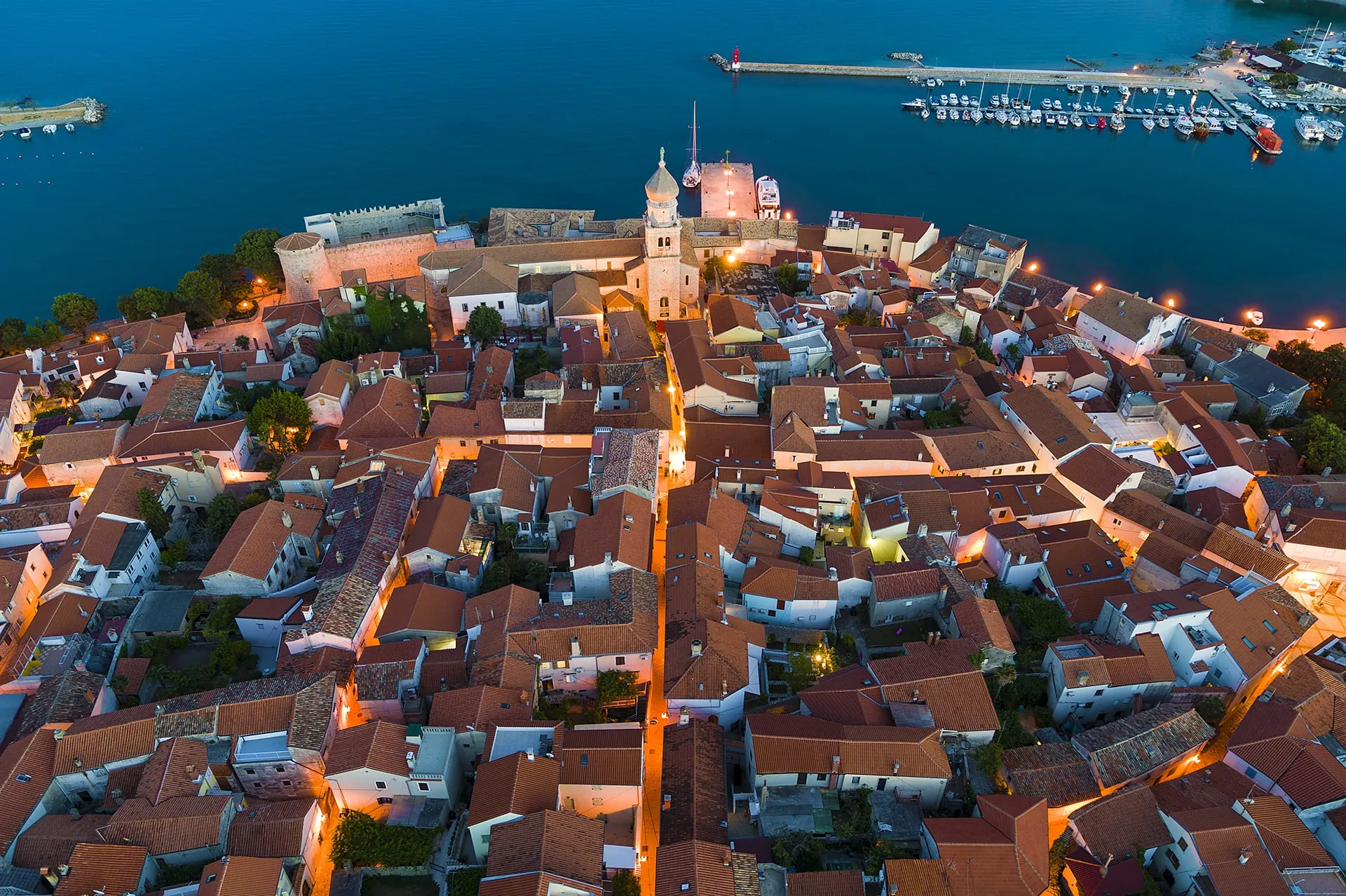
Krk Town

The administrative and historical heart. Explore the Frankopan Castle and the millennial city walls.
Baška Moon Plateau

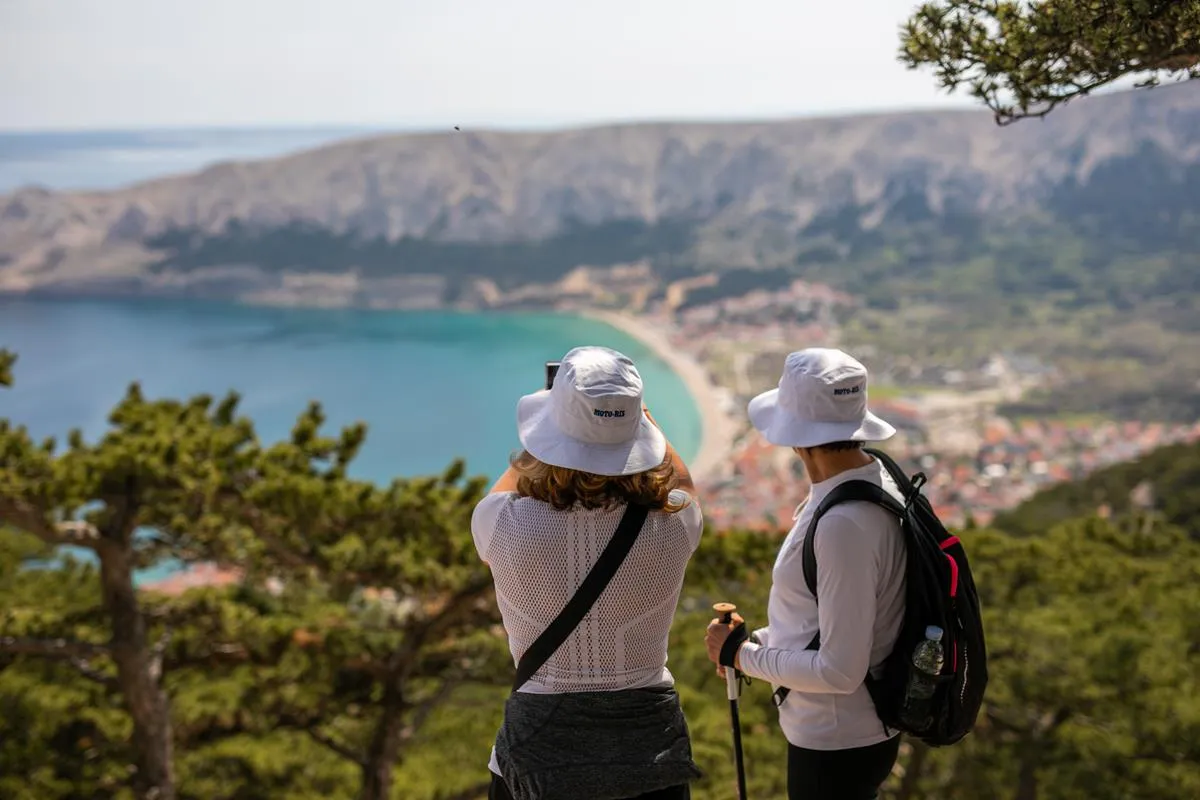
Baška

Home to the 1.8 km long Vela Plaža beach and the Moon Plateau — the most iconic hiking spot on the island.
Vrbnik cliffside town

Vrbnik

Perched on a 50 m cliff, famous for the narrowest street in the world and the unique Žlahtina wine.
Natural Wonders

Croatia's Largest Island Has Stories to Tell

Stretching over 405 km², Krk holds the title of Croatia's largest island — and arguably its most varied. Beyond the trails and beaches lies an island shaped by millennia of geology, Roman ambition, and Mediterranean light. Its interior hides stalactite caves, its southern shore reveals coves that feel untouched, and its coastal fields still carry the ghosts of a vanished Roman city. These are the places that stay with you long after you leave.

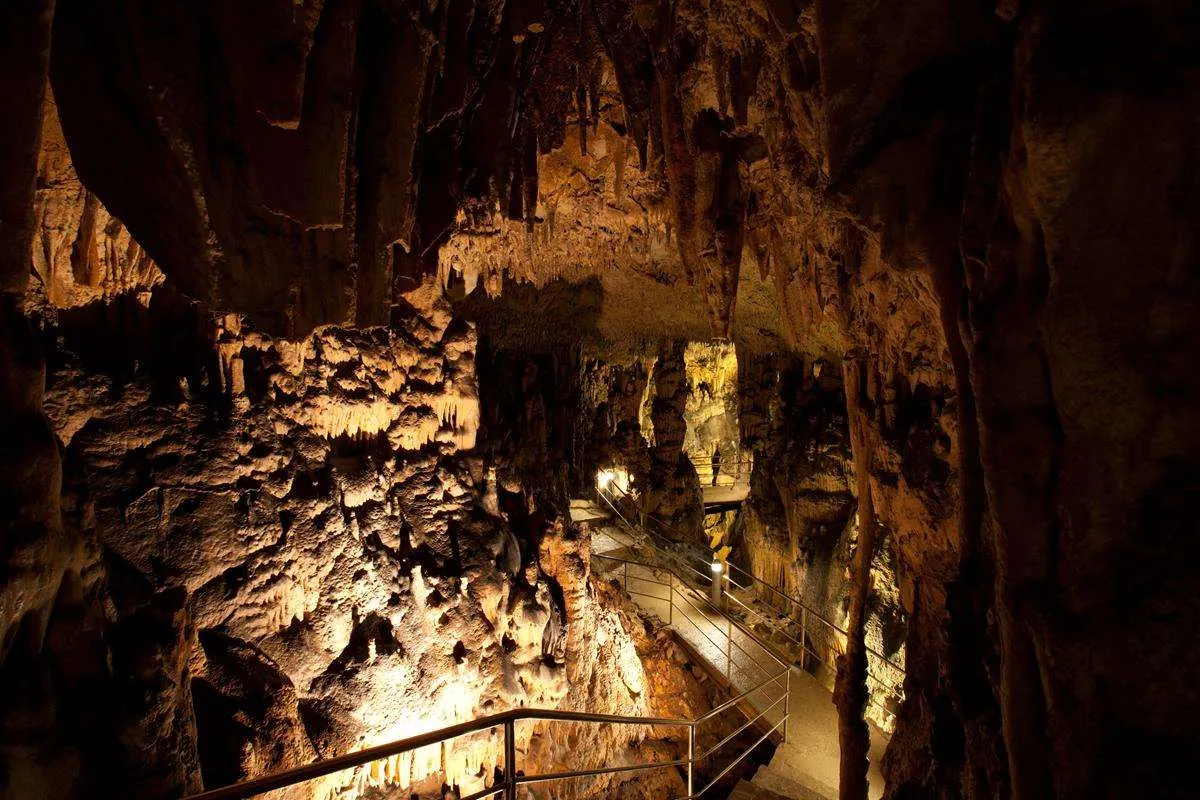
Biserujka Cave entrance near Rudine, Krk Island
Rudine · Near Omišalj

Underground Wonder

Biserujka Cave

Hidden beneath the karst hills near the village of Rudine, Biserujka is Krk's most spectacular underground secret. The cave stretches roughly 150 metres into the hillside, and its chambers are draped with formations that took hundreds of thousands of years to grow — slender stalactites hanging like curtains, broad stalagmites rising from the floor, and calcite columns where the two have finally met.

The name itself — biser means pearl in Croatian — hints at the almost luminous quality of the formations when lit. The cave maintains a constant temperature of around 14 °C year-round, making it a cool refuge on hot summer afternoons. A guided walkway threads through the main galleries, suitable for most visitors including families with children.

Open May–October Guided tours only 14 °C inside

Secluded South

Stara Baška & the Wild Southern Shore

Long before modern Baška became a popular seaside town, Stara Baška — Old Baška — was the original settlement on this stretch of coast. Today it remains one of Krk's most authentically quiet corners: a handful of stone houses clinging to a hillside above a series of crystal-clear bays, with barely a tourist board sign in sight.

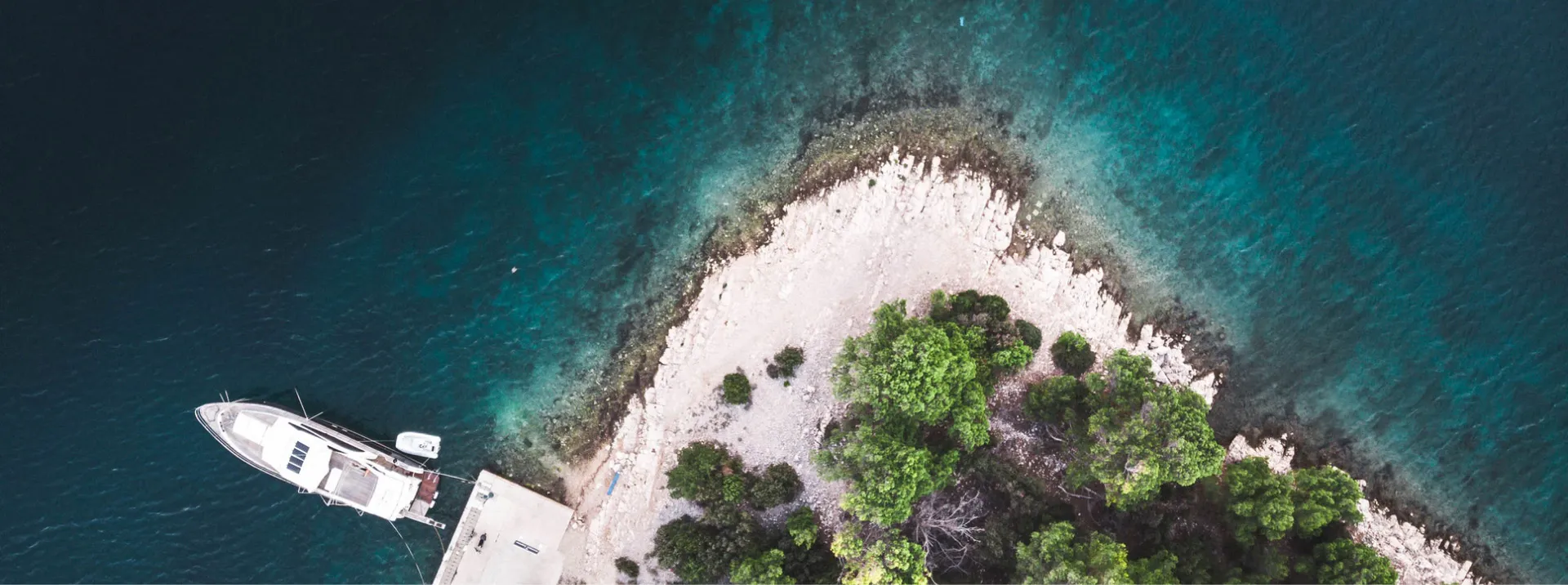
The shoreline here is raw and dramatic. Sheer cliffs drop straight into deep blue water at Zala Beach, where a ledge of flat rock practically invites cliff-jumping into the sea below. The surrounding hills are laced with unmarked paths that reward anyone willing to scramble a little — each ridge reveals yet another hidden cove below, reachable only on foot or by kayak.

For cyclists, the winding road south from Baška to Stara Baška is one of the island's most exhilarating descents — and a genuinely hard climb on the way back up.

Cliff jumping Kayak access Quiet village
Wild rocky cove and turquoise water on Krk's southern coast near Stara Baška
South Krk · Stara Baška
Crystal clear Adriatic cove with pebble beach and pine trees on Krk Island
Adriatic · Krk Island

Sun, Sea & Pebbles

Beaches from Grand to Secret

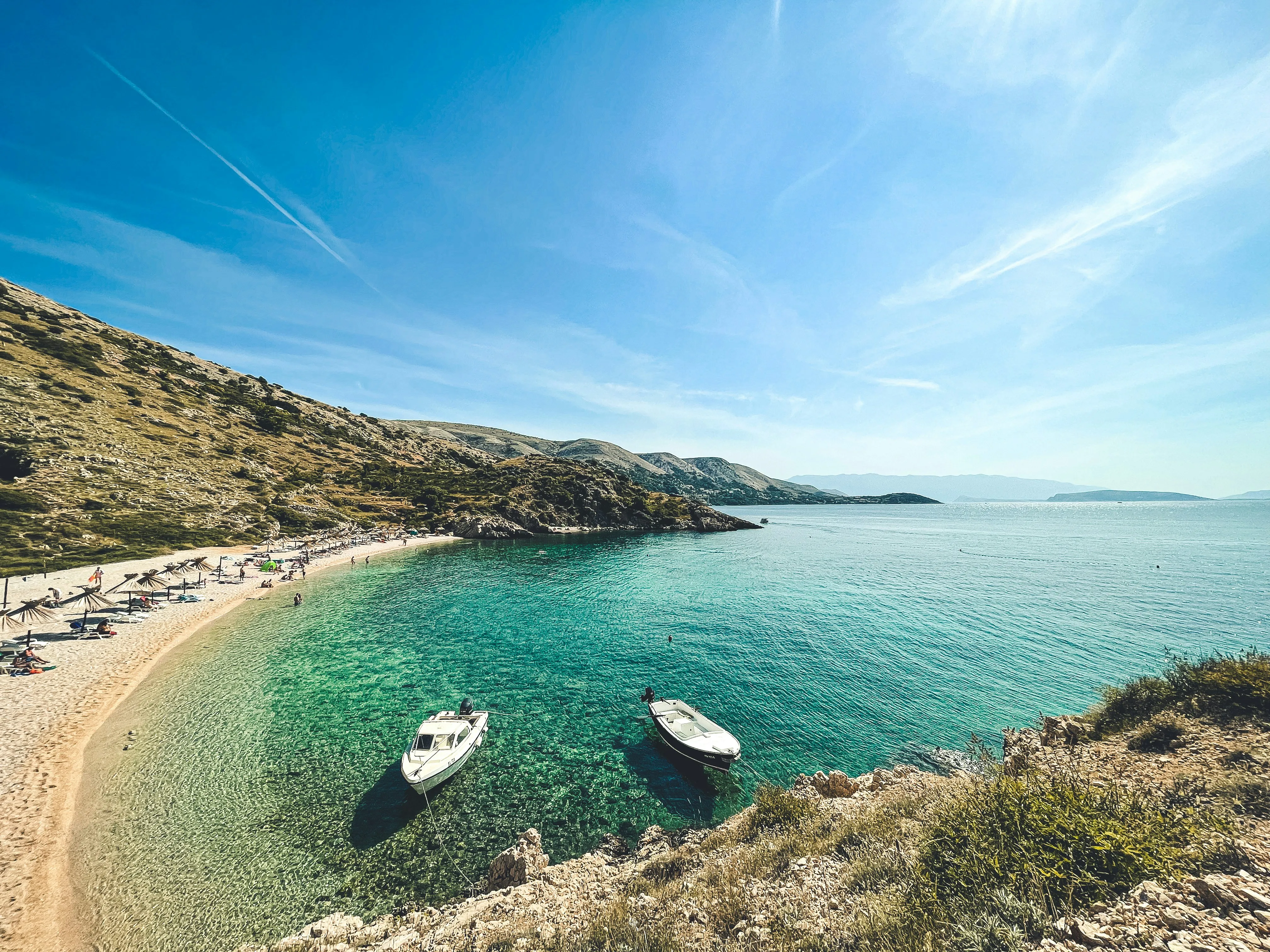
Krk's beaches are as varied as its landscapes. On the south coast, Vela Plaža at Baška is the showpiece — nearly two kilometres of gently shelving pebbles backed by the moon-white karst ridge of Hlam — and rightly one of the most celebrated beaches in the Adriatic. It faces south, soaking up sun from early morning to last light.

But the island's most memorable bathing spots are often the ones you have to work for. Vela Luka, reached by a 90-minute hike along the cliff path from Camping Bunculuka, rewards you with a pebble bay cupped by high white walls, with water so clear you can count the stones on the bottom from five metres up. Similarly, the succession of small inlets between Malinska and Njivice — connected by the so-called "Paradise Road" path through pine forest — feel almost private, even in peak summer.

A note for sensitive feet: most Krk beaches are pebble or stone. Swim shoes are a worthwhile addition to the kit bag, and sea urchins are present in rockier spots.

Vela Plaža 1.8 km Vela Luka by trail Paradise Road path

Living History

Mirine – Fulfinum: A City Swallowed by Time

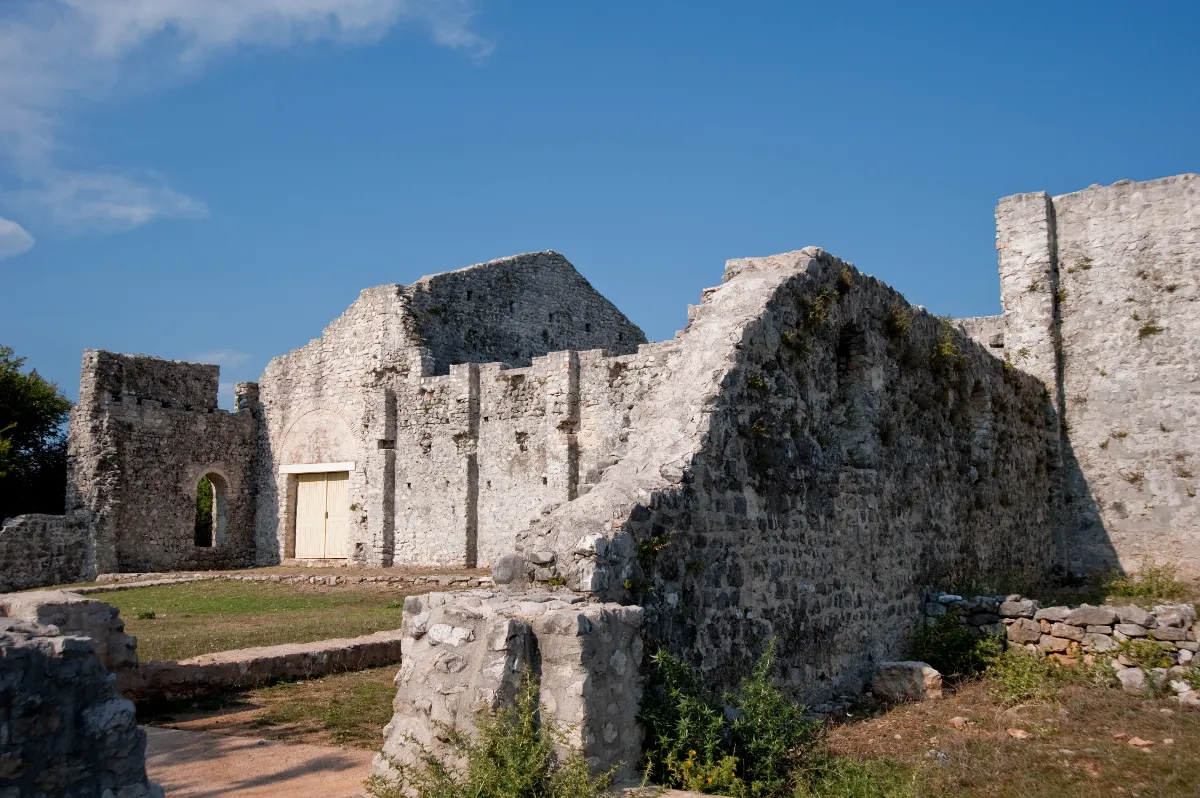
Just outside Omišalj on the northern tip of the island, a gravel path leads through scrub and fig trees to the remains of Fulfinum — a Roman municipal town that flourished in the 1st century AD. What you find there is both humbling and quietly moving: wide stone foundations, fragments of mosaic flooring, and a 5th-century Early Christian basilica whose apse still stands against the sea.

The most striking detail is what the site hides: part of the ancient town has actually slipped into the bay. At low tide, in calm clear water, you can make out column drums and stone blocks submerged just a few metres offshore — entire streets that the sea reclaimed over the centuries. Local boat tours sometimes pass over the underwater section, and snorkellers report the uncanny experience of swimming above Roman walls.

The site is open year-round and free to visit. The walk there from Omišalj through the pine grove is pleasant enough to be worth the trip even without the archaeology.

1st century AD Free entry Open year-round Underwater ruins
Ruins of the early Christian basilica at Mirine-Fulfinum archaeological park near Omišalj, Krk
Omišalj · Archaeological Park
405 km² Croatia's largest island
1 cave Open to the public
~70 Named beaches & coves
2,000+ yr Of continuous history

Area Guides Coming Soon

We are currently mapping Njivice, Malinska, and Punat. Each area will have a dedicated guide with curated trail suggestions.